Why Australia’s cocaine ‘gold rush’ makes for gripping fiction
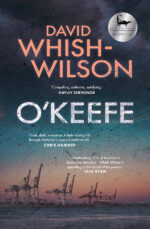
Assuming a new identity to enter the thrilling and dangerous illegal shadow network at Fremantle Port, undercover operative Paul Cutler returns in O’Keefe by David Whish-Wilson,
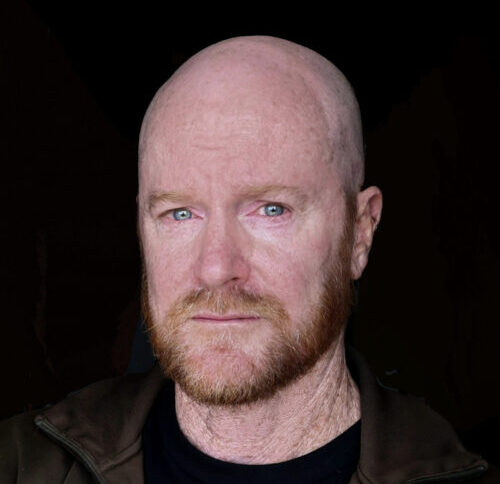
David chatted to us about how he conducted his underworld research, his own similarities with Paul Cutler/O’Keefe and his feelings around incorporating violence into his novels.
What kind of research did you do when preparing to write this novel?
Unlike a lot of research for my previous novels, the research for this novel was largely conducted online. While I received general background from a friend on Border Force difficulties policing the massive growth in drug importation, and some general background from people who know more about the cocaine trade than I do – because this is a rapidly evolving situation – a lot of the most relevant and current research is available on the web. There are a lot of media reports, private documentaries and podcasts on this issue, particularly centered upon Europe and the fears surrounding the effects of the cocaine trade on the democratic institutions of countries like Holland, Belgium and parts of Spain. The issue is similarly relevant in Australia because Australians are, per capita, one of the largest consumers of cocaine, and yet the wholesale and street prices are extremely high, making drug importation extremely lucrative. At the time of writing, a tonne (a mere one thousand kilos, or half the weight of an average car) of cocaine can wholesale for $180 million AUD. Let that sink in for a moment.
What challenges did you face giving your undercover agent, formerly Paul Cutler, a new identity? Do you share any of his skill set?
I wouldn’t say I share any of his skillset, although it’s true enough that like many writers, I’ve always been a bit of an outsider. The advantage of being an outsider is the potential development of heightened observational skills, and the ability to imagine yourself in another’s shoes – important for Paul Cutler/Paul O’Keefe as he tries to pass himself off as someone he isn’t.
Do you have any parameters or guidelines for yourself when it comes to the depiction of violence in your work?
I try and minimise the use of violence, and only use it when necessary. Unfortunately, when you’re writing about organised crime and the international drug trade, it’s a truism tha,t because of the money involved, the supply chain of a drug like cocaine is blood-soaked from production to the final point of sale. It would feel disingenuous to not represent this accurately to a certain extent. My own parameters for this kind of representation involve trying to make sure that every employment of violence is there only if it’s absolutely necessary. I have witnessed a lot of violence, and in fact murder, and I weigh representations of violence against my own experiences – if it feels like a representation might traumatise a reader, I don’t use it.
How are the issues of drug smuggling and Australia’s cocaine ‘gold rush’ being addressed in the real world?
Sadly, they aren’t. We, like most countries, are locked into a prohibition cycle where the only people who gain from it are politicians who get to talk tough on crime, and organised crime figures themselves. I am certainly not pro-drugs, having witnessed the damage that addiction causes firsthand, however, thinking of drug use as a criminal rather than a medical issue (as we think of alcoholism, for example) appears extremely short-sighted. We know that for every drug seizure made that a larger proportion of supply remains unhindered, and I certainly don’t envy Border Force or local police tasked with trying to achieve what simply isn’t possible using a punitive prohibition model – the cessation or even the minimisation of harmful drug use. A good reference for those interested in the history of the so-called ‘war on drugs’, it’s consequences and how some countries are breaking with the prohibition model, is British journalist Johann Hari’s Chasing the Scream.
What’s next for David Whish-Wilson?
I’m putting the final touches on the next Lee Southern novel, set in Perth in 1999, while trying to daydream my way into a premise for the next Paul Cutler novel.
O’Keefe is available now from all good bookstores and online.