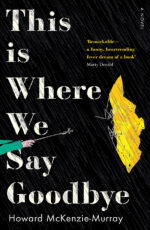
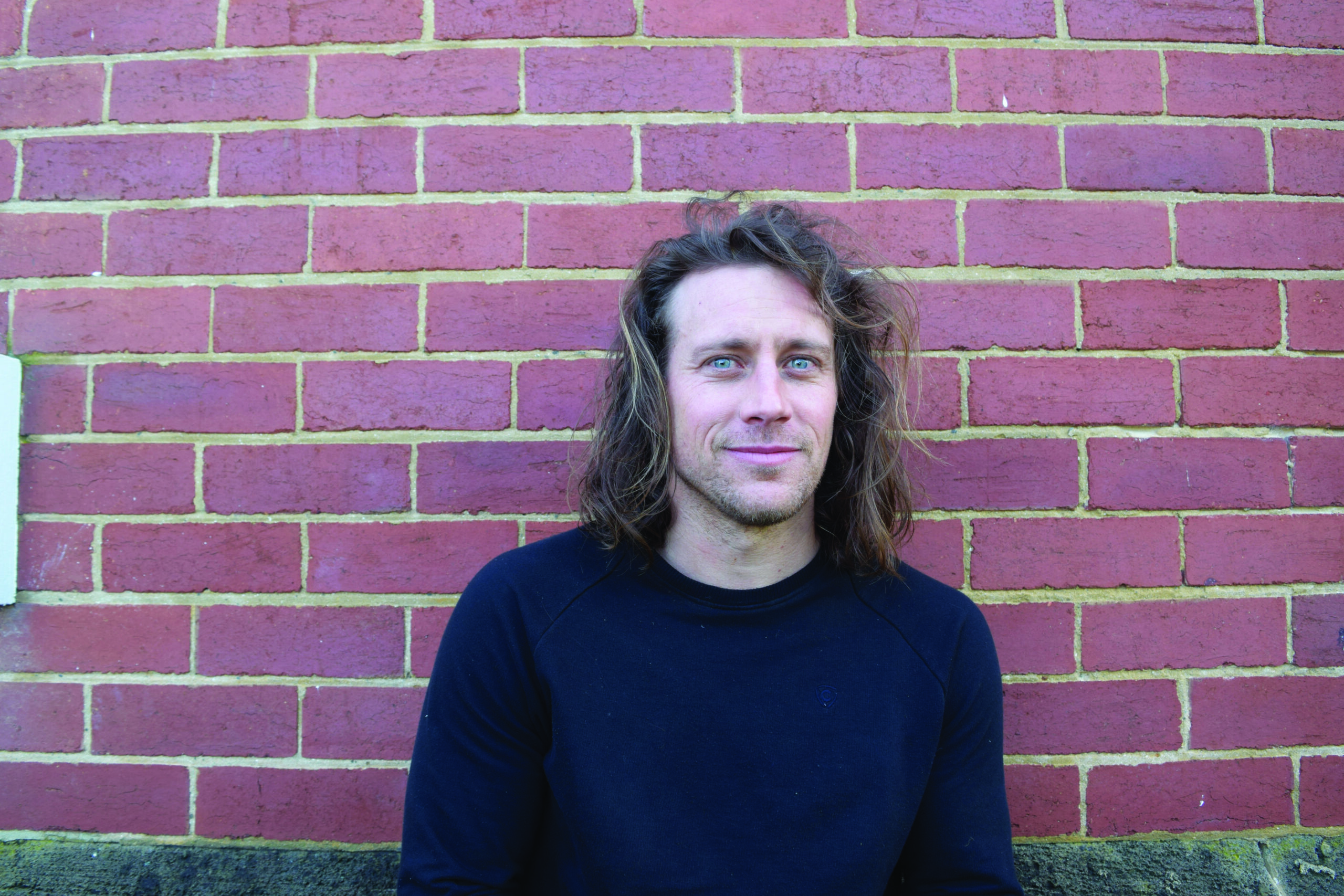
An interview with Howard McKenzie-Murray as his remarkable debut novel, This Is Where We Say Goodbye, bounds onto the shelves
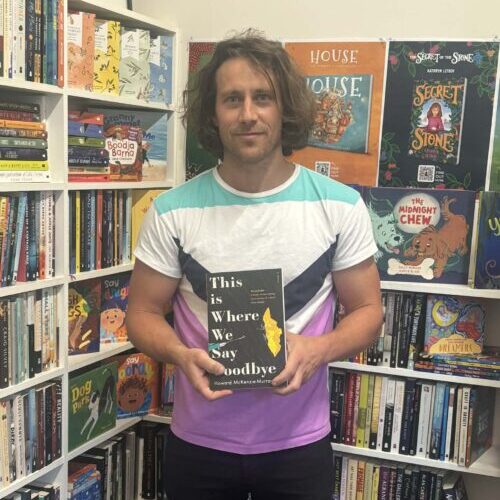
Howard McKenzie-Murray’s debut novel This Is Where We Say Goodbye is a quirky, bittersweet story full of vivid characters and energy as twenty-one-year-old protagonist Maud reels in the aftermath of loss. In this interview, Howard speaks about how his background as a playwright shaped his fiction, what writing the novel taught him, and how real people inspire fictional characters.
How did your background as a playwright influence the way you approached the writing of this novel?
I think it’s a case of having to be who you are. I’m basically physically incapable of imagining people in wide-open rollicking settings where you cut casually in time. Where huge plot events are given in a single sentence. That’s not me. That one sentence of another writer might be my entire work. I imagine things in discrete moments and sometimes I find how they talk more interesting than what they’re talking about. What I’m saying is that there’s a staged quality to my imagination. Action happens in closed spaces, characters enter and exit, and they bring with them play-like props. Writing this book was no different. My imagination operated out of the same old theatre it would if I was writing a play. As the writer, I’d jump up out of the director’s chair and replace the baseball bat prop of one of the characters with an old ballet shoe prop, and tell the characters to continue. Or draw a faint moustache on the poor old lady and then go chuckling back to my seat. The other influence of theatre writing is dialogue. My characters are almost always pathological chatterboxes.
What did you learn about yourself through writing this novel?
By accident, writing this novel gave me everything. I was at a dead-end. I wanted to belong to the Grand Old Club of Serious Writers (Tolstoy, Hemingway, Roth, Joyce). I tried to write about our war years – except we didn’t have them – and I tried to write about our great famine – except we didn’t have one – and I wrote a lot about my squalid, religious upbringing in Dublin – except I hadn’t had that either. I learned to notice my own life.
Your novel is full of vibrant characters. Are any of them inspired by people in your own life?
Most are. You can’t beat life. So I just try to observe it and maybe, if push comes to shove, apply a bit of imagination to it. But I see myself in something like the role of the florist arranging flowers – I can’t take credit for the flowers themselves. This ridiculous world created them. The premise of the book was to tell a story with the voice and narrative ‘idiosyncrasies’ of my younger sister. So Maud and my sister share about 98% of their DNA. In general, the genetic overlap with real people is more like 10% – more of a grab bag. The way a friend or love-rival or self-help guru talks is always liable to find itself in the mouth of a character.
What’s next for Howard McKenzie-Murray?
I’m going to fill back up, I’m going to disappear, I’m going to stare at the sky, I’m going to listen.
This Is Where We Say Goodbye is available now from all good bookstores and online.