A missing flatmate, a would-be writer, and what shame leaves behind: Nadine Browne on Gone Guru
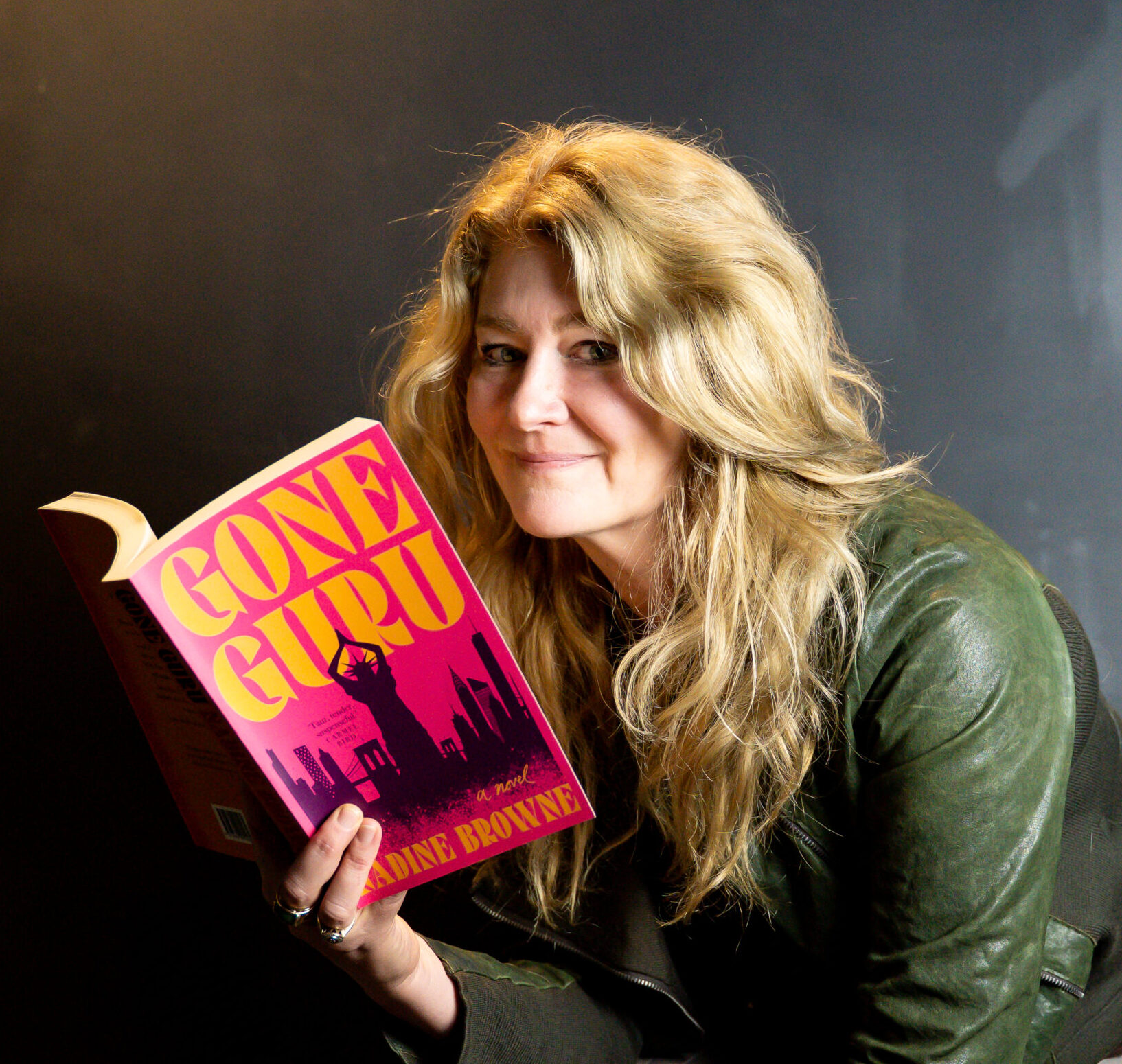
Gone Guru may be a work of fiction, but it’s fuelled by real moments from Nadine Browne’s life – from moving to New York City to the messy, vulnerable work of figuring out who you are (both on and off the page).
In this interview, Nadine reflects on the experiences that shaped her debut novel, and what’s left when you strip back all the things you’re hiding behind.
The setting of New York City is central to Gone Guru. What is your own connection to this city?
If you have a tendency towards anxiety, New York will take it and run. And a lot of the time the city induced nothing more than a good old panic attack inside me, egged on by my initial jet lag, insomnia and negative self-talk. I lived there for two and a half years while I completed my master’s degree. I am not a planner, as this book will attest, and I did absolutely illegally sublet a mouse-infested apartment in Harlem. I was very much surrounded by Ivy League graduates who seemed to speak a language I was still learning. The city became this perfect pressure cooker for the book – a place where you can reinvent yourself completely or fall apart spectacularly, sometimes both in the same afternoon. New York doesn’t care who you were or who you are. For someone trying to figure out identity after leaving everything behind, that cruelty and freedom can be helpful and liberating. The city was disappointing and magical in equal measure. And while at first the city can seem a supreme equaliser – everyone lives in tiny apartments and catches the same subway – it is the tiny differences you start to notice that create whole chasms of inequality.
You dedicate the novel to Danny Kronenfeld – the real-life social service pioneer who created America’s first family homeless shelter. In what ways did he inspire the fictional character of Danny?
The real Danny Kronenfeld spent decades serving New York’s most vulnerable communities with his practical wisdom, humour and genuine compassion. When I was creating the character of Danny – the 86-year-old social worker who essentially solves the case while everyone else is flailing – I kept thinking about that quality of someone who’s spent their whole life actually helping people, not performing help or theorising about it: there is a pragmatic and solutions-focused energy to him.
Like the real Danny, the fictional Danny has this ability to cut through pretence, which was so refreshing to me. He was practical, unsentimental and deeply kind. That comes directly from what I understood about the real Danny’s work: creating shelter wasn’t about grand gestures or ideology, it was about recognising a need, and doing something concrete about it. He was also one of the best listeners I have ever met, which was a rare quality I felt supremely grateful for. In a book full of people trying to figure out who they are, Danny already knows. He’s too busy helping to waste time on existential crises. I found that incredibly inspiring, and honestly, a bit of a relief to write.
Noni reflects on John Freeman’s observation that shame is key to good writing. As a reader and as a writer, have you found this to be true? In what ways?
Unfortunately, yes. I spent three years trying to write a novel that avoided all my actual shame. This book only existed because I gave up and started writing from the shame instead of around it. The shame of leaving your entire belief system and having no idea who you are without it. The shame of showing up at an elite institution with none of the cultural capital everyone else had. The shame of failing, repeatedly, at the thing you moved across the world to do, the shame of burnout and overwhelm.
I think Freeman’s right that shame is where the truth lives. Not because shame itself is good – it’s mostly just painful and exhausting – but because the things we’re most ashamed of are usually the things we most need to unpick. The parts of ourselves we want to hide are precisely the parts that, when exposed honestly, create connection with readers. Nobody relates to perfection. What’s relatable is the ways we’ve failed and kept going. So yes, shame is key to good writing. Which is deeply annoying, but there it is.
What are some of the challenges of using the novel-within-a-novel narrative structure?
It’s a fun process because the failed novel is actually now hidden within a novel that ‘has legs’ as they say. The biggest challenge was not letting the ‘dead baby manuscript’ overwhelm or distract from the actual story. I had to figure out how much of the failed novel to show, enough that readers understand what the narrator was trying to avoid, but not so much that it becomes its own competing narrative. The actual novel needed to feel like what happened when I stopped performing and just wrote what was true.
What is next for Nadine Browne?
I have another novel I hope to publish about the actual escape from the doomsday community! And as part of my PhD on apocalyptic imagination, I am writing a hybrid memoir using Simone Weil’s concept of decreation to examine the six times I thought the world was ending.
Gone Guru is available now from all good bookstores and online.