Bloodlines and songlines: Casey Mulder and a First Nations-led tribute
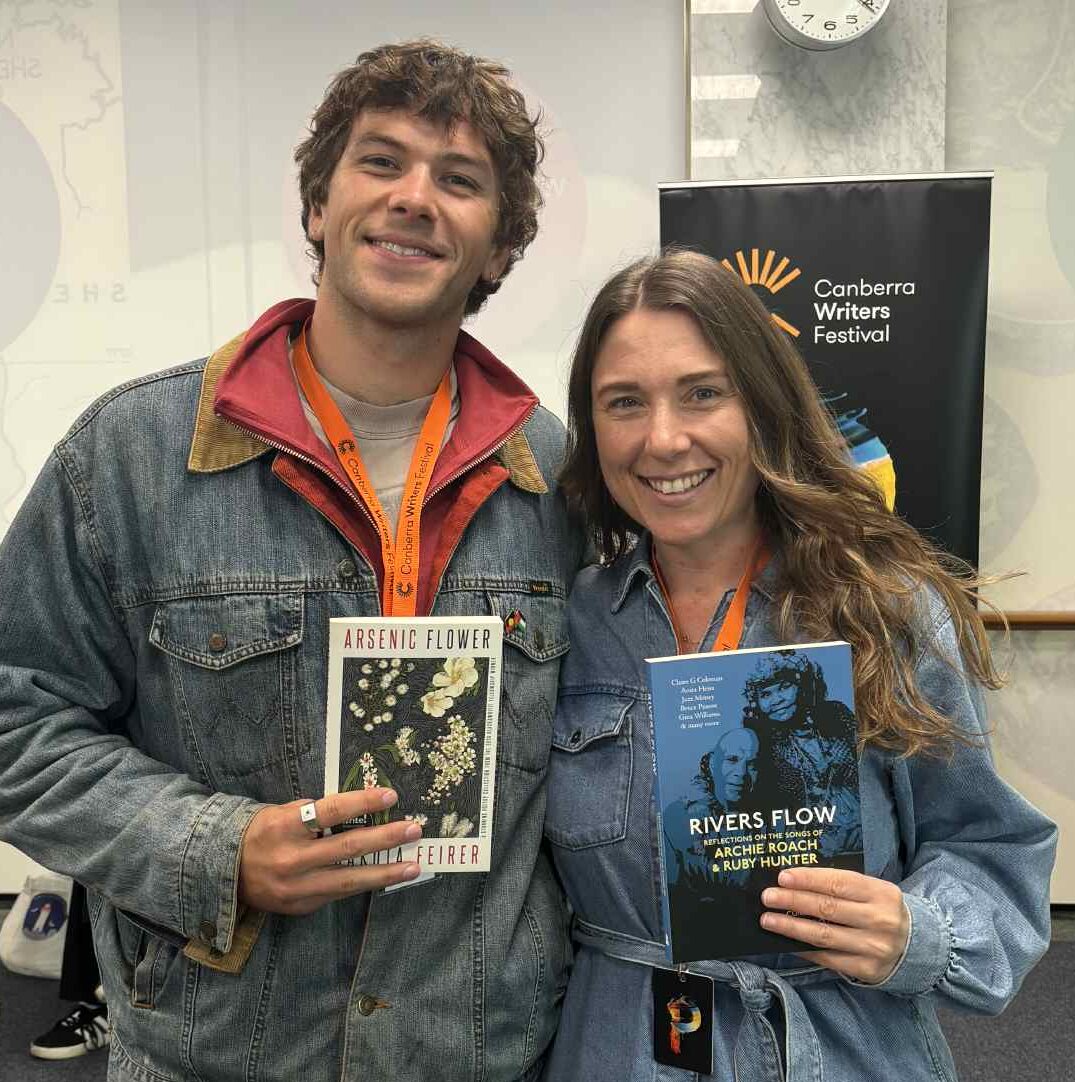
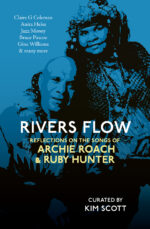
Edited by Casey Mulder and curated by Kim Scott, Rivers Flow: A Reflection on the Songs of Archie Roach and Ruby Hunter brings 23 First Nations writers together to honour the musical and cultural legacy of Archie Roach – a Gunditjmara, Kirrae Whurrong/Djab Wurrung and Bundjalung man – and Ruby Hunter – a Ngarrindjeri, Kokatha and Pitjantjatjara woman.
In this interview, editor Casey Mulder tells us more about how the anthology came about and the power of an all-First Nations-created publication.
What was the genesis of this anthology?
Fremantle Press has produced a series of anthologies where writers respond to the songs of an artist (Paul Kelly, Nick Cave and Kylie Minogue, previously). This iteration in the series came from a discussion between consulting editor Kirsten Krauth and Fremantle Press. They felt strongly that such a project needed to be First Nations-led, and Kim Scott was invited to curate the series, with me as editor. It was important to us that we sought and received the blessing of the family of Archie Roach and Ruby Hunter for this project. We were thrilled when one of their sons, Amos Roach, agreed to write a foreword.
The songs of Archie Roach and Ruby Hunter are the soundtrack to our lives as First Nations people. The Fremantle Press team then met with Kim Scott and myself to discuss curating and editing this anthology, which was to be comprised of all First Nations writers. Kim and I built a list of possible contributors: well-established writers along with emerging writers from around Australia. I then set about contacting each person. As soon as we got a ‘yes’, I asked the writer to select an Archie Roach or a Ruby Hunter song. ‘Took the Children Away’ and ‘Down City Streets’ were selected immediately. Over the months that followed, the writers each worked on a piece of prose, poetry or memoir. Once submitted, I edited each piece with the author.
Why was it important to invite only First Nations writers to contribute to it?
While the songs of Archie Roach and Ruby Hunter reach a broad audience, and they were beloved performers throughout Australia, the experiences they describe in their songs can evoke stories of our own similar experiences. For me, certainly, Archie Roach’s ‘Took the Children Away’ was the first song I was introduced to in a school context that was written by another Aboriginal person. Archie and Ruby spent their careers uplifting and encouraging younger mob to tell their own stories, through music or in any form, and this book – and the stories within – honours this legacy.
Why does the music and legacy of Archie Roach and Ruby Hunter matter?
As Amos Roach says in the book’s foreword, ‘From Yorta Yorta Country, Mooroopna, where Dad was born, and to the Riverlands of South Australia, where Mum was born, the Murray River connects them. From the desert to the forests and the rivers to the seas, North to South and East to West, their Bloodlines and Songlines connection to the land: they connect each and every one of us, making sure no one is left behind, and as they complement each other as Man and Woman, Husband and Wife, Father and Mother, they conduct the whole ceremony. Song Man and Song Woman.’
Through their songs, they connect us to the land and to each other. And the stories in this anthology serve to do the same. In editing this anthology, I listened to each song selected over and over and over. I encourage you to access the Spotify playlist we have provided. Sit with these songs as you sit with these stories, and the significance of the music and legacy of Archie Roach and Ruby Hunter will be very clear.
Rivers Flow is available now from all good bookstores and online.