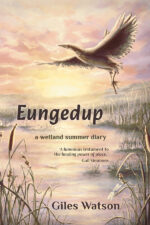
Giles Watson on the nature writers who inspired his new book, Eungedup
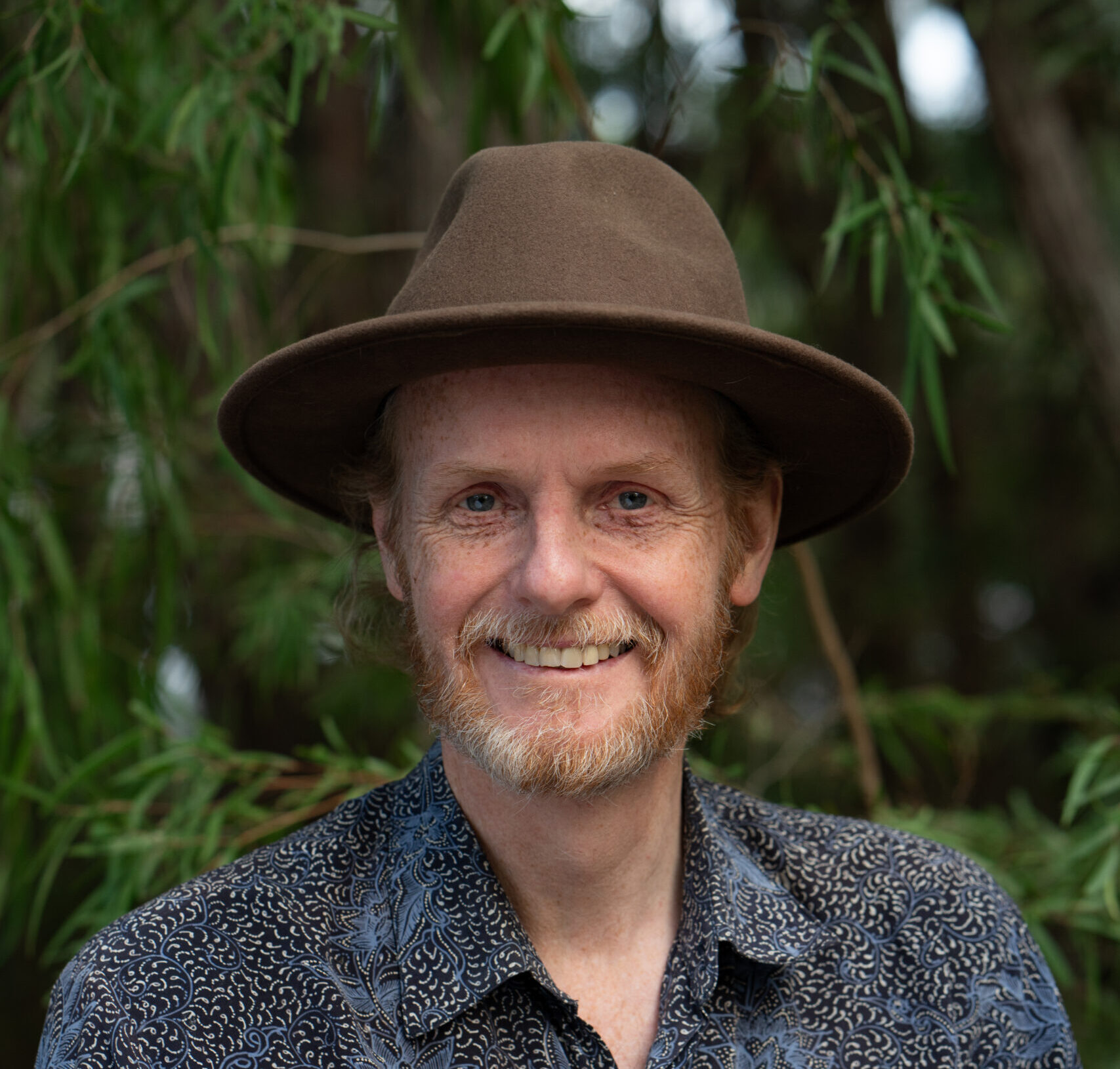
Ask any writer about what inspires them and a life-long love of reading is most often mentioned. For Giles Watson, author of Eungedup: A wetland summer diary, the spark of nature writing came from the books of his childhood – from a worn copy of Watership Down to the radical poetry of Emily Dickinson. Here, he shares more about the literary influences behind Eungedup.
I have had a fascination with nature writing since I was a very young child. Watership Down by Richard Adams was a book that I wore to pieces as I was growing up, and I think it permanently shaped my world view so that I am always inclined to imagine a rabbit’s-eye view of the world, or a bandicoot’s – or a beetle’s. I think that the challenge for modern writers about animals is to reflect animal intelligence without resorting to anthropomorphism as Richard Adams did, but his writing was visionary.
My father had a jaw-droppingly beautiful collection of eighteenth- and nineteenth-century natural history textbooks, which I also read as a child, and among these was an illustrated copy of that great early classic of nature writing, Gilbert White’s The Natural History of Selborne. So, from the beginning, I have been trained through my reading to derive joy from close observation, and not to disregard even the smallest of creatures. There is a passage in Eungedup: A wetland summer diary, where I look at a drop of water from the wetland under a microscope; it was these very old texts, and my father’s scientific influence, that taught me to do that.
As far as nature writing is concerned, I am probably most deeply influenced by John Clare, Emily Dickinson, J.A. Baker and Amy Liptrot.
John Clare’s best poems, such as ‘The Fern Owls Nest’, are models of how to observe and be present in the moment. ‘The Landrail’ sees Clare delighting in his search for an elusive British bird, these days known as the corncrake, pre-dating my own obsession with glimpsing an Australasian Bittern by more by a couple of centuries. He was arguably the first environmentalist poet to write in English, too, in poems such as ‘The Fallen Elm’ and ‘Remembrances’, which lamented the destruction of beloved features of his childhood landscape during the Enclosure Acts. There are few more powerful documents of the psychological impact of ecological grief. He developed his gift for poetry despite often being called away from school as a child in order to do farm labour; as a result, his punctuation is not ‘secure’, as a modern English teacher might put it, but that is to the poems’ benefit, as he compensated for the lack of punctuation with sophisticated rhythms which meant that the sense was never lost.
Emily Dickinson is probably the most obvious influence on the forms of some of my own poems: she wrote almost exclusively in ballad metre, but she smashed up the form by peppering it with little dashes which sometimes suggested pauses – the resting of the pen nib on the page as the poet pauses to think – hesitations and ambiguities. I have been in a quiet personal dialogue with Dickinson’s work for years now, and the poems that are written in her form in Eungedup are all, in one way or another, homages or replies to her. She is at her most profound when she is writing about the contrast between the ‘centre’ – the homely and particular, the chrysalis – and circumference – space, heaven, the butterfly’s spiralling, Icarus-like flight (‘Two Butterflies Went Out at Noon’. Dickinson doesn’t shy from the brutal in nature (‘A bird came down the walk’), or from exquisitely questioning the limits of her own ability to adequately describe the sublime in nature (‘How the old mountains drip with sunset’). She writes riddles (‘The only ghost I ever saw’ is, I believe, a riddle whose answer is a white plume-moth), elegies, poems that repeatedly confront the fear of death, and in one poem, about the exact feeling she gets when she almost treads on a snake (‘A narrow fellow in the grass’). My adoption of her metre, dashes and idiosyncratic capitalisation is only the most superficial aspect of her influence on me. She can leap from the hyper-particular to the spiritual in an instant. I relate to that.
J.A. Baker’s The Peregrine (1967) has haunted me for years. Like Eungedup, it is in diary form, but Baker collapses several years’ worth of observations of this consummate predator into a narrative encompassing a single non-breeding season among his local Peregrines. He’s even more obsessive about his peregrines than I am about my bittern; he pretty much wants to be a peregrine. He was writing in the age of DDT, when the imminent extinction of his subject seemed like a distinct probability, so behind some of that fierce identification with the bird was no doubt a degree of rage against his own species. His work is as close to poetry as prose can get, and I, too, love the hinterland between those two forms.
Gail Simmons, another nature writer I admire, wrote about how my text is about ‘the healing power of nature’. In one sense, that is untrue: I was not healed of my illness through my visits to Eungedup – indeed, I had not even received the diagnosis of my particular form of chronic fatigue, fibromyalgia, until after it was written. But Eungedup certainly is about the way nature gives me a reason to carry on. Amy Liptrot’s The Outrun (2015) is similar. I don’t think she is ‘healed’ of her alcoholism by her return to the wilds of Orkney and her pursuit, like Clare, of corncrakes – but I do think that it gives her something better to live for. Among recent literary texts, her book is perhaps the one I have re-read the most often. She has a way of inviting her reader to the inside of her mind – and that is a very warm and spacious place.
Finally, another very different influence on the forms of some of my poems is the US beat poet, Lawrence Ferlinghetti. His stepped verse-form helps me to capture moments at the wetland that unfold in a series of staccato glimpses. Ferlinghetti does the same thing, but in an urban setting, in ‘Two Scavengers in a Truck, Two Beautiful People in a Mercedes’, ‘The Great Chinese Dragon’, and ‘Dog’.
Eungedup: A wetland summer diaryis available now from all good bookstores and online.