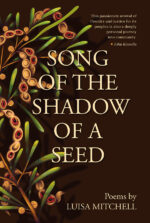
Healing, connection and truth-telling: Luisa Mitchell talks about the journey of a seed in her debut poetry collection
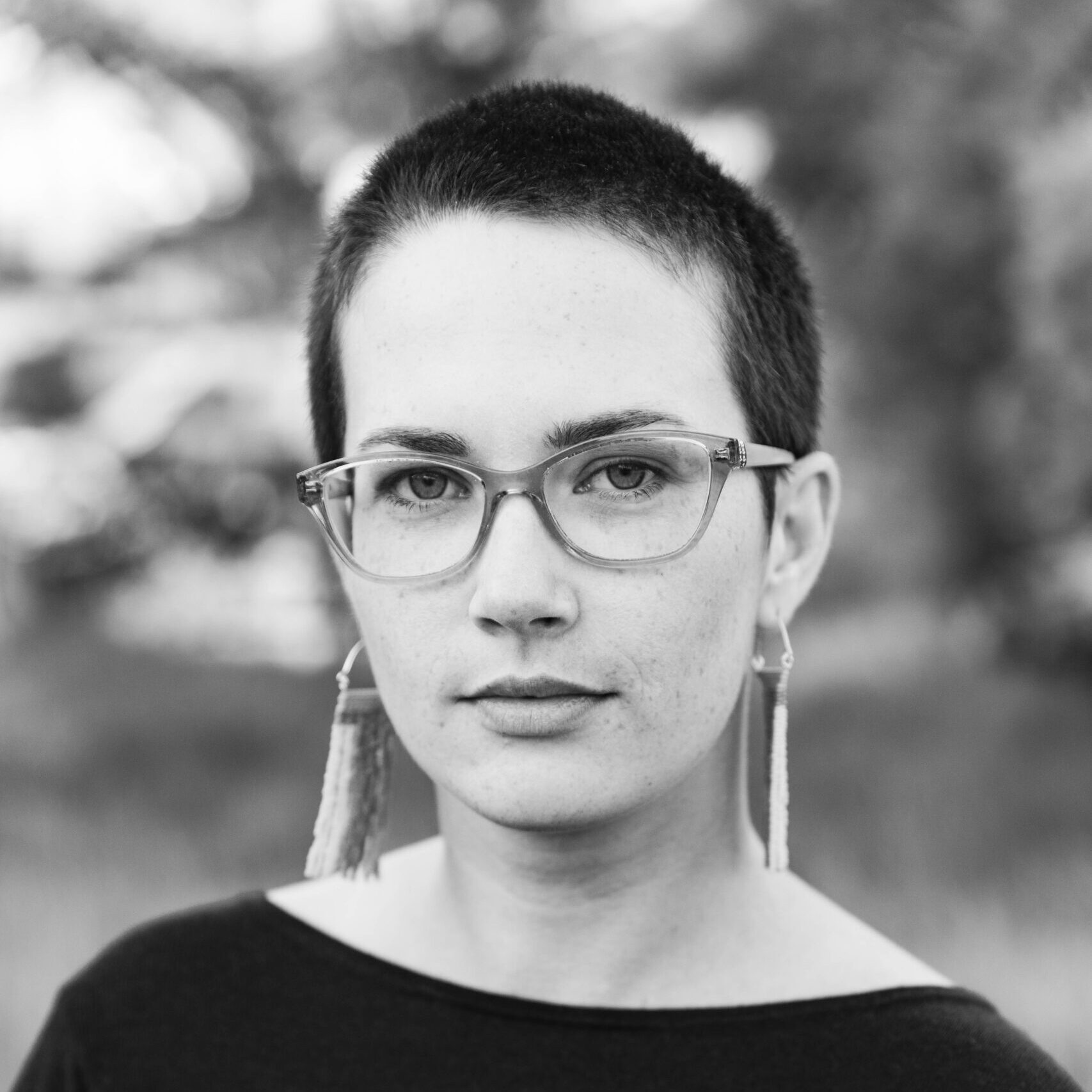
Elders, memory, language, hunger, burning, flowering, flight … these are the different cycles around the life of a seed featured in Luisa Mitchell’s collection of poems, Song of the Shadow of a Seed. In this interview, Luisa speaks about writing toward healing, connection and truth-telling, the importance of truth-listening, and the hope that readers might leave inspired to trace their own histories and deepen their care for Country.
How did you choose which poems went into this collection? At what point did the idea of the travelling seed become the organising principle?
When I approached Fremantle Press, I had written about 10–15 poems that perhaps unconsciously were reflecting the mental and emotional work I had been doing at the time, reflecting on my ancestors and family history, and my sense of place and responsibility on Nyungar Boodjar. Once these original poems were selected and I was commissioned to write the rest of the book, I realised where my heart was leading me and that I wanted to lean into these themes further. I asked myself: what do I want out of writing this book? And the answer was healing, connection and truth-telling. With those goals in mind, I set about writing a list of ideas and books I wanted to read. I also had a bunch of poem ideas and one-liners I’d been writing for the last couple years in my Notes app on my phone that I was now finally motivated by a deadline to finish. In the end, I wrote more poems than I needed, so the ones that I cut were usually because they felt disconnected to the overall themes.
The title Song of the Shadow of a Seed came to me quite quickly in a moment when I was trying to express the feeling of what I was writing in one line. There was a sense in my poems of feeling invisible, inadequate, uneducated, unalive, and the only way to visualise that was the spiritual notion I felt that before we are born, we are all specks of spirit floating around, waiting to be born and begin a new life. That was how I was feeling, so small, I was barely the shadow of a seed. I mentioned this title idea to my mum, and all credit to her, she immediately started researching ‘seed shadows’, which is a real, scientific concept that models how far seeds fall away from their parent plant and in what conditions they thrive in. It was a perfect metaphor to lean into for this book, and I took Mum’s idea for the overall structure and ran with it, researching the life cycle of plants, and using this journey of a seed to end the collection on a message of hope and transformation.
Who are the poets that you read?
Mostly First Nations legends like Charmaine Papertalk Green, Elfie Shiosaki, Jazz Money, Jack Davis, Uncle Alf Taylor, but also John Kinsella, Mary Oliver and Wendell Berry. I love listening to or reading the writing of local, emerging poets in our community, like members of the First Nations Writing Group at Centre for Stories.
While writing my collection, I had a lot of fun diving into older, classic poetry and drew ideas from individual poems by Alexander Pope, Emily Dickinson, Allen Ginsburg, William Blake, Jonathon Swift and Andrew Marvell. More recently, I was greatly inspired by Naag Mountain (2024) from Manisha Anjali.
Why is truth-telling important? Why is truth-listening important too?
Truth-telling is important because, if done well, it leads to healing, empowerment and redress for First Nations peoples who are still facing ongoing impacts of colonial violence. The problem is that many of our truths are actually already out there in public and political domains—in our movies, books, paintings, in the countless federal royal commissions and inquiry reports into the ‘Aboriginal problem’. Many of the problems that mob are facing have been shared to a large extent, they just haven’t been addressed. That’s why truth-telling can’t effectively occur unless truth-listening is given equal attention and focus. Truth-listening ensures First Nations stories are heard in ways that lead to systemic change, adjust power dynamics and give control and self-determination back to our peoples. It means non-Indigenous people take action after hearing those truths, and ensure those acts of colonial violence and their legacies don’t happen again.
I think once First Nations are truly heard, then our key message of ‘listen first and foremost to Boodjar, to Country, which Australia has so horrifically destroyed and ignored\’ will also be achieved. This will lead to Australians totally redefining ourselves and our systems of governance, so that we return to ways of being that live in custodianship and balance with Country and each other.
What do you hope that readers gain from your work?
I hope readers walk away feeling inspired to explore their own family history and traditional cultures, and through this, build a deeper sense of duty and care to the land on which they live, and respect for First Nations Elders and custodians.
What is next for Luisa Mitchell?
I would like to write another book, and then another one, and so on! I don’t feel like poetry is the only genre I will work in. I always dreamt of writing fiction, YA and children’s picture books, but perhaps there will be some academic research and non-fiction writing one day too. I’m very passionate about the power of education and I would love to learn some animation skills so I can turn my stories into short films as well.
Song of the Shadow of a Seed is available now from all good bookstores and online.