What does a good person do when their goodness is tested? Award-winning author David Whish-Wilson on Free World
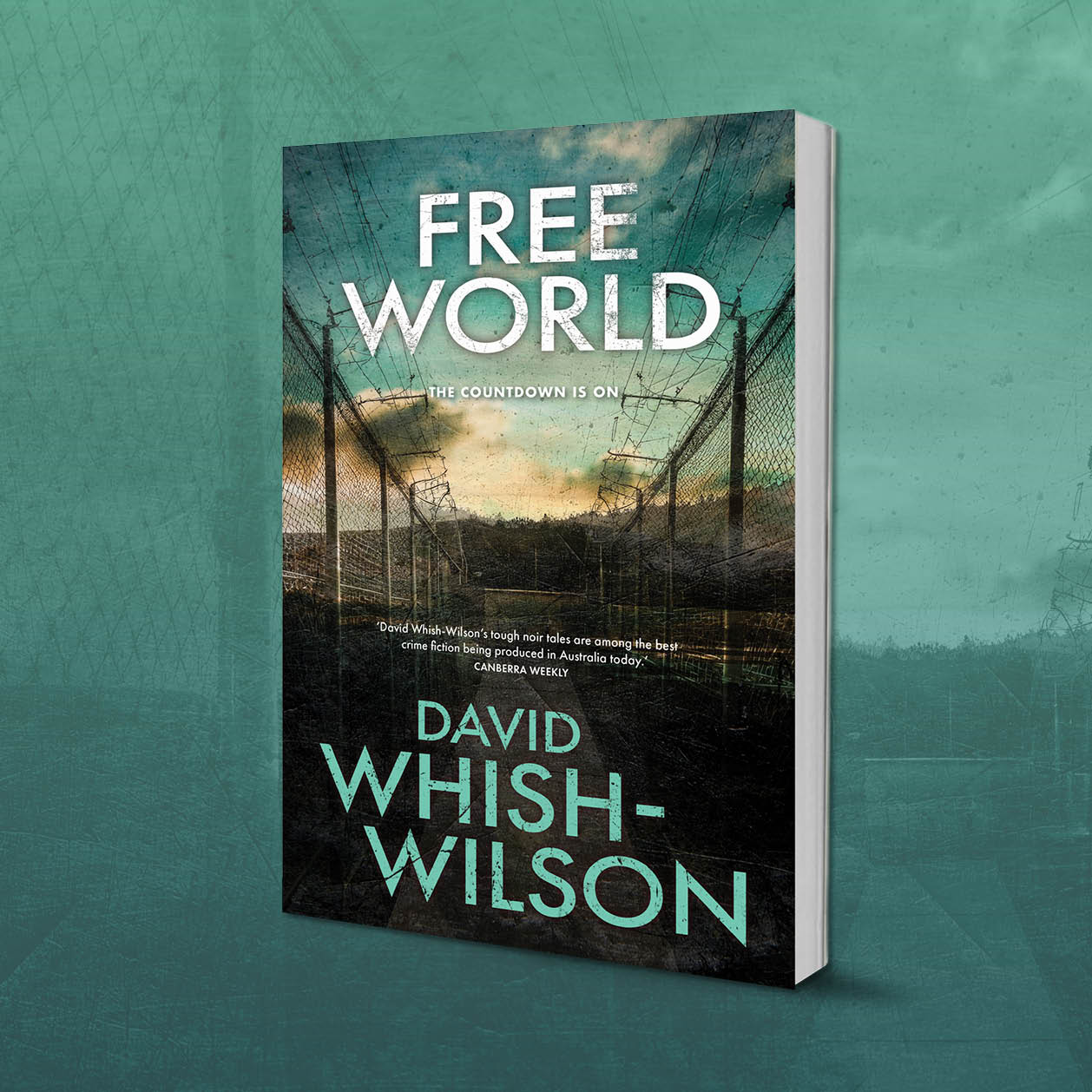
In Free World, the gripping third novel in the Lee Southern series, award-winning author David Whish-Wilson turns a prison into the setting for a locked-room mystery that tests both his characters and the boundaries of goodness. In this Q&A, he discusses building plot through character and consequence, drawing on his experience of prison environments, exploring masculinity under pressure, and why he may not be ready to say goodbye to Lee Southern just yet.
This novel has a series of plot revelations that will keep readers guessing. How do you go about constructing a watertight plot?
My usual approach to developing plot is to focus on character and let the consequences develop naturally, building up atmosphere and testing characters by way of placing them in difficult positions, which is pretty standard for the hard-boiled or traditional noir genres. I greatly admire the puzzle-creating mysteries associated with cosy crime, but have never been able to stick with writing one – my brain just doesn’t work like that. With Free World, I had an existing character to work with, and a setting, and it seemed pretty inevitable that, given the setting and the inciting incident, that despite myself I was working with a traditional form – that of the locked-room mystery, from which the rest of the plot flows.
What aspects of your own experience of working in prisons, and with prisoners, have made their way into this very atmospheric novel?
I make a point of not using anybody’s stories directly, as they’re not my property, but certainly I was able to draw upon my own experiences and observations of working in prison environments when building up a picture of the prison used in Free World. I’ve also read a lot over the years about prisons and imprisonment and there is, of course, a great tradition of prison writing to draw upon when referencing a prison as a setting for a novel like Free World.
Would you say that writing about masculinity (toxic and healthy) is one of your preoccupations as a writer? What are some of your others?
I’m primarily interested in human behaviour, as something that I find endlessly fascinating, and certainly masculinity in its varied forms is something that I think about a lot. Given that my novels often explore extreme environments where people are in difficult situations that draw both the best from them (loyalty, kindness, generosity, etc.), but also the worst (cruelty, misogyny, selfishness, etc.), it’s natural that many of the more toxic aspects of masculinity are represented. Even though I feel like in real life I’m surrounded by good men, sadly you don’t have to look far to see how disproportionately the darker aspects of masculinity affect our domestic, community or broader social lives. However, if there’s one question that all of my novels return to time and again, it’s this (since we all think of ourselves as good people) – what does a good person do when that goodness is tested, or when the consequences for doing good are worse than from doing nothing, or doing bad?
This is the third Lee Southern novel, following on from I Am Already Dead. Do you have plans for a fourth?
I get quite sentimental about my characters, and often find myself thinking about them. Since writing feels like giving them a life, I find it hard to imagine not writing more about them, and there are always a few ideas wandering about – so yes, plans are afoot.
Free World is available now from all good bookstores and online.