Imagining the After: Rebecca Higgie on love, death and memory
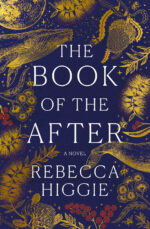
What began with the surreal image of a dead whale swimming between Perth skyscrapers grew into Rebecca Higgie’s sweeping exploration of love, memory, climate crisis and the stories we tell about the dead. We spoke to Rebecca about the six-year journey behind The Book of the After, the real-world urgency shaping its imagined futures, and why human connection is something worth fighting for.
Warning: The following interview contains spoilers for The Book of the After.
How long did this novel take to write? Has it changed over time or have the fundamentals remained the same?
The novel took about six years to complete. It took four years to write, with around a year and a half to two years of that taken up with research. It was then another full year of editing, followed by another year of working with my publisher to get it to print. Before that, the novel started as an unpublished short story that explored what it would be like to be remembered forever in the realm of the After.
The idea for the novel started as an image, that of a whale swimming between skyscrapers in Perth. The CBD wasn’t flooded, so I asked myself, how is the whale doing this? My answer: the whale is dead. From there, I turned to people on the ground. Most were rushing to work, ignoring the whale, but then I saw a child and a man looking up at it. Here, I surmised that the only way they could see the whale was if they too were dead. A sick child and a criminal, long remembered. From here, the rules of the After emerged. Eleanor and Negus came from asking the question: who are the long remembered? I thought of kings, queens, rulers, politicians: people we weave into the national myths we use to narrate our past, our present and our future.
These were the fundamentals that remained the whole time. What did change was the structure of the novel and my focus on the climate. The story started brewing during the 2019–2020 Black Summer. Initially, my anger over the failure of so many governments to address climate change shone through in Eleanor and Negus, who initially didn’t fight much for the climate. They had, despite their love story, a complicit side. Then I read climate scientist Joëlle Gergis’ seminal work Humanity’s Moment. In it, she calls on artists to ‘imagine a world we cannot see’. She calls for hope. From this, I made a radical turn, wanting to imagine what our world could look like if the children striking for the climate today became our leaders tomorrow. I wanted to imagine Australia implementing a full fossil-fuel transition. But I also wanted to show that there will be a point at which we will be too late. In the book, I offer both scenarios.
Where did Little Bee come from and why did you choose to include him?
Little Bee was the first human character I imagined for the novel. He started as a simple image of a child looking up at a whale swimming between skyscraper spires. As I started to expand the novel’s scope, he – and the other children in the novel – became central. For me, children had to be present in this novel about love, climate crisis and the future of humanity. ‘Children are our future’ is a common trope, not only in literature but in climate change discourse. While I do draw on this idea, I wanted to expand it to thinking about how we, as humans, need to make a turn back to each other. In Little Bee, we see a hopeful child striving for a future among the stars, similar to how many people see the future of humanity in technology and far-off planets. Throughout the novel, we see Little Bee’s focus shift back towards the things that truly matter: family, human connection and Earth. While the adult love stories dominate the narrative, the novel as a whole tries to show how all forms of human love hold us together in precarious times. This includes love of family and of children.
Some people today are choosing to forgo having children due to climate change. Others say they don’t want to bring children into a world gripped by ecological crisis; others believe our world cannot sustain such a large human population, especially at our current rates of over-consumption. I believe that our personal choices do matter – from the cars we drive, to the food we consume – because they represent our values and the world we want to see. But in a world where half of the world’s climate pollution comes from just thirty-two fossil fuel companies, this focus on individual choices over political and systemic action is stopping us from striving for real change. For many people and cultures, family and children are fundamental to their humanity. I don’t believe climate action emerges from denying the things that make us human. Rather, it is invigorated by it. Even in characters without children like Eleanor and Negus, the way they strive for the next generation and for each other is what makes their fight so compelling. By having children be prominent at key times in the narrative – from Little Bee to the young people conducting a hunger strike on the Parliament House lawns – I hope the reader can reflect on that.
Do you believe in an After?
I have my own ideas of an afterlife, as tied to my faith and my belief that all living things are connected to one another. However, I don’t believe the human obsession with pondering what happens after death is as important as considering how we narrate who we are through those who came before us.
In the novel, Negus muses, ‘Do we cease to exist if people forget us? Does history? What are we, ultimately, if not legacy? What is the connection between the real us, and what others remember? Does the real us even matter?’ These are questions the book itself tries to pose. The living use the dead to craft plural and, at times, competing histories. Within my own family, the stories of the Higgies coming to Australia and cultivating ‘new’ plots of land in rural Victoria are remembered in different ways. Some see it fondly as an example of our family’s roots, our legacy tied to the foundation of a nation. For myself, I see that land as stolen and my roots tied up in invasion and colonialism. Ultimately, the lives that existed back then are gone. What remains are the ways that we see them, the arguments we have over the ‘truth’, and how we use these stories to either forge connections or make conflict with one another.
The many versions of Guy Fawkes – from Catholic terrorist and ‘devil in the vault’ to gallant freedom fighter and anarchist – show how the stories we tell about a person shift over time to serve the interests of the living. I think it’s important for us to consider how the stories we think of as ‘truth’ are just memories, and memories shift.
Are you an optimist or a pessimist – a dreamer or a realist – when it comes to the state of the world?
At times, I feel we are already gone, extinction guaranteed, and we are the last of the humans. I’m the woman at parties telling everyone that we will one day become the fossil fuels that destroyed us. Even relaxed visits to the beach have me lamenting that at 2°C of warming, ninety-nine percent of coral reefs will die. I am accused of ‘going on too much about saving the world’. But this is where my turn back to dreams – to hope – emerges from. The world doesn’t need saving. It has gone through multiple mass extinctions and ecological transformations; its very surface has shifted, entire landmasses migrating. Earth, as a planet, will be fine. But humans and all the remarkable forms of animal and plant life that require Earth to be a very particular temperature in order to survive – we will not. And when I look at the life that is in danger, I see something that must be fought for even if extinction is almost assured. Humans, as a species, can be so destructive. But we also make art, we write books, we care for animals, we plant trees, we love. Love: what makes humanity worth saving is how we love one another. When I think about unconditional love, the type that affirms that every living being is worthy of empathy and existence, I feel the gravity of what’s at stake in the world today. And that calls me, even in my gloomy pessimism, to write and fight as if I’m an optimist.
Do you think that the creative artist has a role to play in imagining our future?
Yes, very much. Creatives give the future a form, whether it be through visual, audio or textual mediums. What I value about art in climate advocacy is how it brings the human – our dreams, worries and feelings – into the science. When done right, art slots human lives in between statistics and climate predictions. Literature, however, has a history of imagining climate crisis as some far-off dystopia. The reality is, climate crisis is here now. It is not some distant threat, but a reality we are all living through. In my work, I want to show that. I want to imagine our future based on what climate scientists are telling us, while also centring what makes fighting for a future worthwhile: love, family and community.
The Book of the After is available now in all good bookstores and online.