‘We still need heroes and heroines’: Alan Carter on writing crime in today’s world
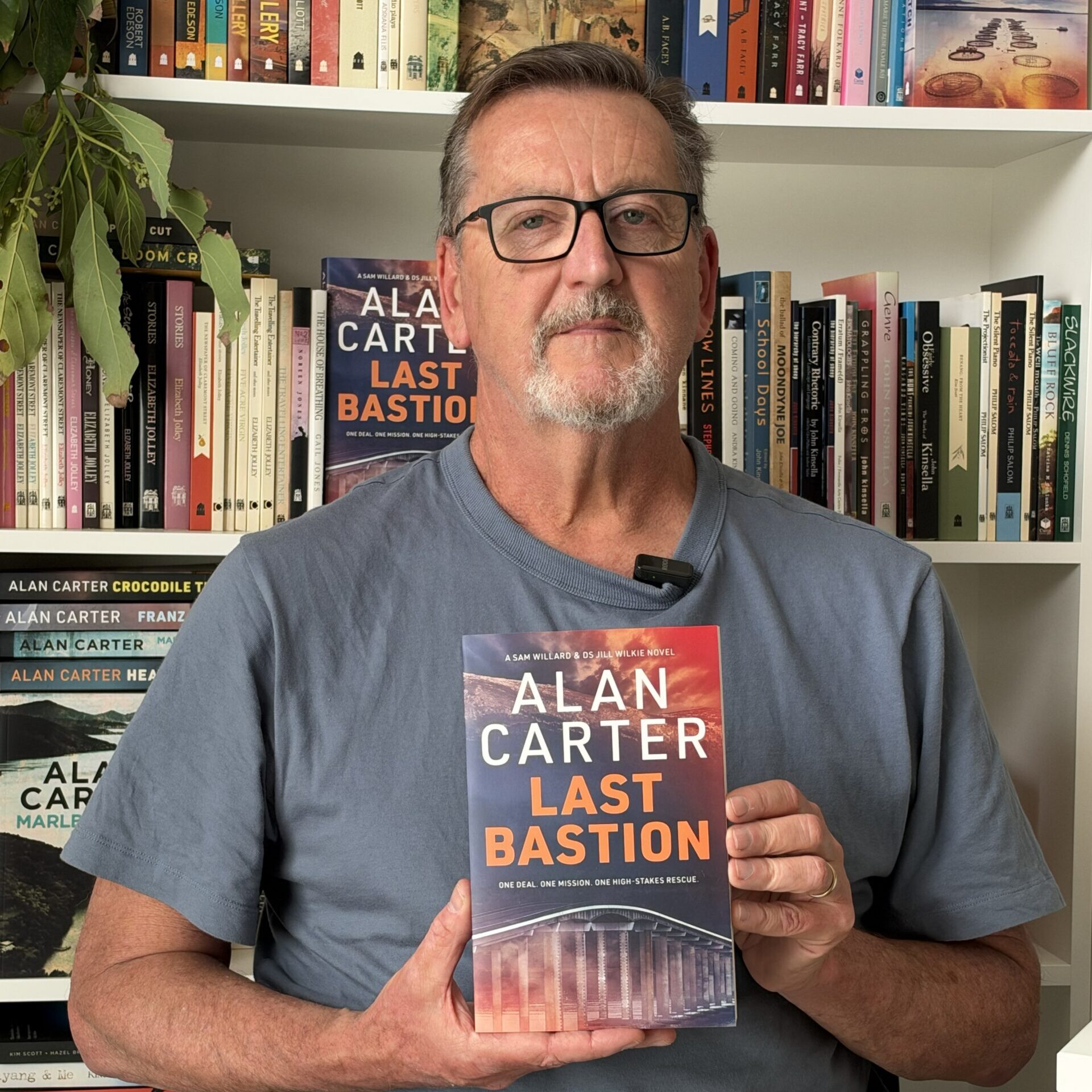
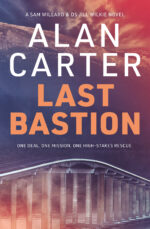
Deep-fakes, misinformation and untrustworthy leaders … Diving deep into the world’s problems might sound depressing, but to award-winning crime author Alan Carter there’s hope in reading about it. In this interview, Alan takes us through the creation of his latest novel, Last Bastion, and how crime novelists play an important part in our developing world.
Did this novel begin with a ‘what if’ question? Or are you instead writing more closely about a place that you already (to quote something you once said) ‘know and see’?
The rise of the far right in Australia, and around the world, is front and centre in the news headlines. That, plus the relatively recent shocking attacks by far-right and sovereign citizen extremists on police officers in Queensland and Victoria, point to an increasingly fractured, polarised and dangerous juncture in society. I’ve always used crime fiction as a means of holding a mirror up to ourselves, and so it goes. Tasmania and Hobart are not immune.
Did you come to any conclusions while writing this novel about the country in which you live?
At times, particularly in the early stages, it felt profoundly depressing. I suppose that’s what you get when you spend too much time hanging out with the zeitgeist. When world leaders set such a toxic example and when misinformation and fake technology combine to undermine basic notions of true and false, right and wrong, fact and fiction or lies, it’s difficult to see how the world pulls back from that. Small wonder then that, in the apparent absence of heroes and heroines in real life, we might seek an escape to them in the stories we tell. In so doing we can perhaps find what unites us rather than divides, conceive of a better way for things to be, and to be able to cheer on those who still know the difference between right and wrong, and choose to act on it.
In what ways do you think Australia has changed since Cato Kwong solved his first mystery in Prime Cut in 2011?
Can it be that it was all so simple then? I suppose that while Cato had to deal with bad folks, lies, idiots, all that, he at least didn’t have to argue that up was down or black was white or whatever. The rise of social media and its use in mass disinformation hadn’t really kicked off when we first met him. Far-right populists existed where they belonged, on the fringes – along with the conspiracy theorists, flat-earthers and anti-vaxxers. In many ways, Cato is better off at home with his family, his piano and his cryptic crosswords. But at least in most crime novels, the reader can be reasonably confident that, by the end, some kind of equilibrium is restored and we can sleep easier once again.
To what extent do you think that novelists (and crime novelists in particular) can contribute to important conversations about our nation’s identity?
Novelists, and crime novelists in particular, have been part of the conversation about national identity since the First Fleet and the first crime novel. Sometimes challenging our ideas of ourselves, sometimes reinforcing our myths of ourselves. Either way, it’s important and necessary to stay engaged. We still need heroes and heroines to fight the good fight and right the wrongs of the world. To set a good example to us all.
What is next for Alan Carter?
More hi-octane zeitgeist hi-jinks with Jill and Sam.
Last Bastion is available now from all good bookstores and online.