Many women, many worlds: Writing lives into story with five First Nations authors
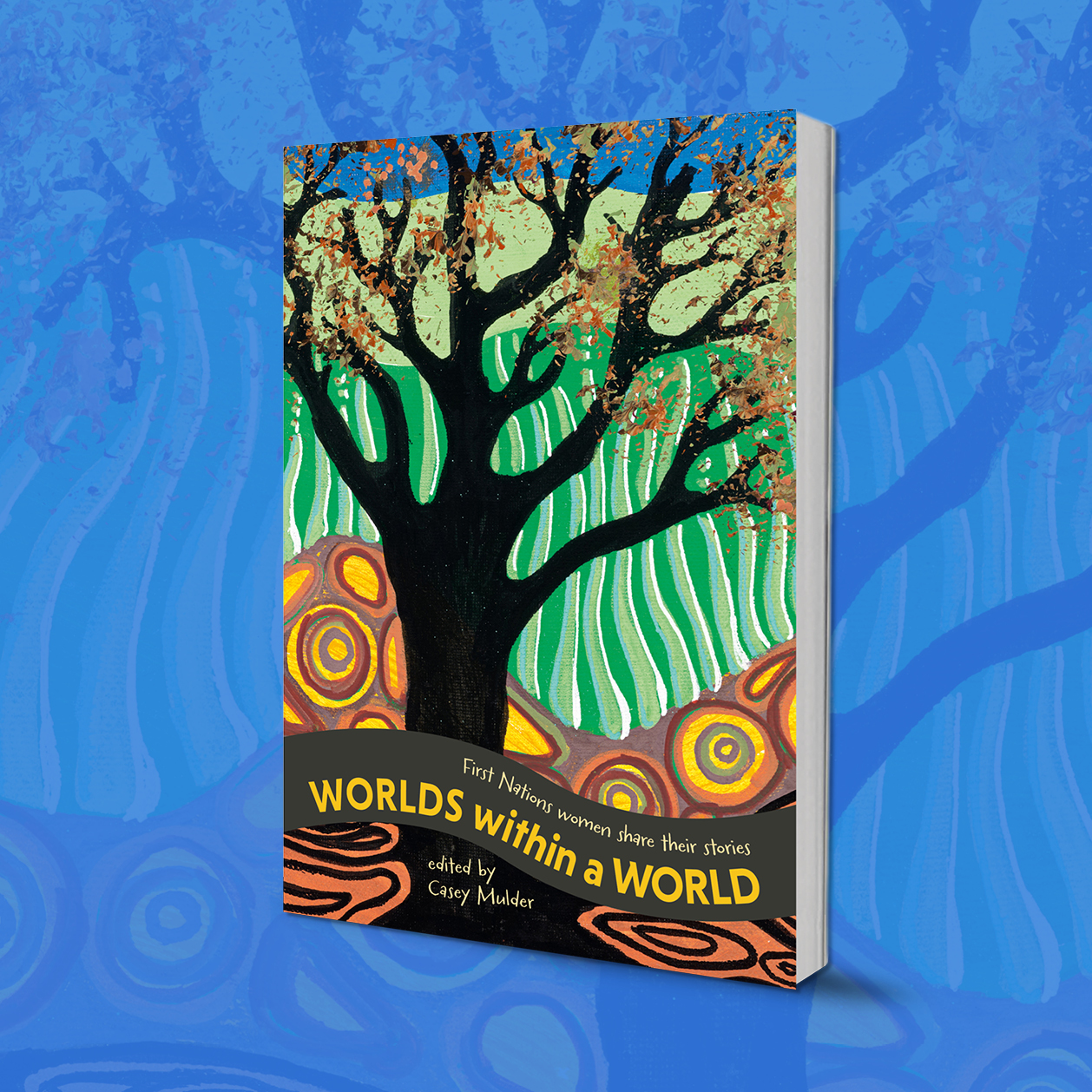
Worlds Within a World is a powerful collection of stories from five First Nations women. Edited by Ballardong Noongar woman Casey Mulder, these honest and wise reflections provide insight into what it means to grow up as a First Nations woman in the second half of the twentieth century.
In this interview, authors Barb Hostalek, Valerie Swift, Carol Foley, Deborah Green and Lois May share what they learned in revisiting their pasts, how to carry multiple worlds, and provide us with some inspiring advice.
What did you learn from writing your memoir piece?
Barb Hostalek: The opportunity to give memoir writing a go gave me a creative way to think and shape my truth into a story I felt reflected my imagination and lived experiences with integrity and care. I discovered an internal battle with memory, sometimes being selective on moments; at times this was emotionally a calm sea, and other times cyclonic. I learned that writing is a powerful way of telling stories and, as an author, choosing moments that reveal deep patterns of humanity is vital in connecting society. I wanted to share the importance of voice, letting present-day insight sit alongside the rawness and, at times, uncomfortable nature of the past, especially as a collective. I can’t stress more, the invaluable nature of writing structure matters: a good hook, scenes, turning points and reflection work together to create momentum. Most of all, memoir isn’t about what happened but why it mattered—transforming personal experience into something universal, resonant and human … reading all the women’s stories, this is what Worlds Within a World has done.
Valerie Swift: The need to consider others in my life, the where and how they would fit into my story. In retracing my steps, re-walking my life journey, I realised my promise that I would try in every way not to pass on the effects of my life traumas onto my children, was done in the best way I could with the resources I had at any given time. My thinking and planning for writing my memoir were always about utilising a strength-based approach so others, especially my children, could take something positive from my story.
It also had me reflecting on the person I have become, regardless of my life experience. Writing this memoir confirmed for me that I have done well enough at life: I can see and feel positive things, I can forgive but not forget, I can love and let be, and for that I am thankful, very thankful for the person I am. I am certain my mum and dad would be so very proud of me.
Carol Foley: I learnt that it is important to tell a story, and to record your life experience, so that the written story becomes a reflection for my children to actually learn about their mother and learn what happened to her. Before this, I felt that my children didn’t know my life experiences, so I wanted them to hear it from me and not learn about it from other people. Also, when it comes to the Stolen Generations, I often hear people say, ‘That never happened.’ And my response is: ‘Really? Where did you hear that?’ When it comes to being a part of the policies and people of the Stolen Generations, even though it is part of our history, it is not being taught to the wider community. It is basically saying that our lives don’t matter, because those things supposedly never happened. So, that means the value of somebody’s life experience is nothing. I wanted my children to be able to read and to hear my story, but I also felt that I only wanted certain things to be told, and hopefully I have shared positive life experiences without taking away from the horrible things that happened. Because even though I had a positive upbringing, I missed out on all the life experiences of living with, sharing with and learning from my Aboriginal family.
Deborah Green: I wrote about my mother’s life and was only able to do so because I have had an enormous amount of healing in my life. If you are going to write a memoir piece, be prepared, as you will feel emotions that you may not have been aware were there. I hear people say it is a healing process when they write, but for me, I had to be healed before I could do the writing.
What would you say to a younger version of you if you could speak to her now?
Lois May: My original writing, the long version of my story, starts me writing as an eleven-year-old. It was the image of the gentleman with the man with blue eyes who changed the course of my life. I heard singing in the church, and I turned around because I had never heard music like that before. A man with bright blue eyes saw me turn, and he winked at me. That man was Mr B. He took an interest in all the Aboriginal families living in East Perth, and he also took an interest in my family too, even when we had moved back to Carnamah (which was the first time we had moved away and when we were the furthest from our families ever).
I had visited Mr and Mrs B’s house, and I always knew I wanted to live in their house one day – and I did. Mr B knew I wanted better for myself. I will write about him more in my autobiography. Although I haven’t changed so much from when I was a young girl, the stories of my past have become more important to me. I have even more of a fire in belly to write. My great-grandson has the same determined streak in him – he never gives up. And I think this story pulls out my mother’s qualities – how hard it must have been for her – to give us the love and attention and care and good food when she was up against a brick wall the whole time.
The young Lois already had a plan for her future. I have always had that in me, and my instincts or sixth sense have always been very handy to protect me. Mum was always very vocal about self-protection. She brought us up to know that we could say no, and that we had the right to protect our own body. This knowledge is invaluable, and you try to give this to your own children. My dad was also protective, and he did protect us as girls in the family. So, the advice I would give to young Lois would be to follow her dreams – even though this is exactly what I have done! But I have always been a person who knows when they are looking a gift horse in mouth, and to go for it.
How many worlds do you feel are contained within your own world – and how do you carry each of them?
Carol Foley: The lyrics from that song ‘White Man’s World’ really resonate with me. Basically, for me, there are always two worlds – one Aboriginal and one non-Aboriginal. When I was young, I learnt how to live in both. I learnt how to survive in the non-Aboriginal, wadjela way of doing things: e.g. working hard towards something, becoming recognised for your skills. Then when I got older, with education and life experience, I learned very clearly that the Aboriginal way of doing things is very different to a white Australian or Dutch way of doing things, and the cultures are quite different.
How do I carry each one of these worlds? It depends what mood I am in, and it depends what is going on around me as to how I carry myself in those worlds. When I perform, I can. When I choose not to, I don’t. Sometimes I choose to walk away and stand alone, even though that can be very isolating. Now, whether I want to be around my Aboriginal family or my non-Aboriginal family, I can choose which I want to do. But when I was growing up, that choice was not given to me.
What would you do differently if you had your time over?
Deb Green: If I had my time over, I would have tried to learn more from my grandmother before she passed away. My grandmother had a wealth of cultural knowledge that was imprisoned behind a wall of silence due to colonisation. It is a major reason I wrote about my mother in this memoir. Three generations suffered when they took my mother from my grandmother. The maternal bond was disturbed, which caused my mother and grandmother to have conflict. I therefore had no relationship with my grandmother, and I feel robbed of all the knowledge that could have been passed down.
What advice would you give to someone else if they wanted to write their own life story?
Barb Hostalek: Everyone has a good story to tell. Make it the version you want to tell and start as soon as you can. The first draft is the hardest and then there is the editing, reviewing, reflecting and re-writes, and reviewing, and editing and reflecting. Trust in the creative process and believe you can, you’ll get it done. I found great strength when I realised that when you participate in artistic and creative pursuits, you are not alone … and it’s in that strength that the world looks brighter and that together we can all make changes and elevate each other beyond the mundane, and the ugly to find the beauty, peace and most importantly—hope for tomorrow.
Valerie Swift: To firstly realise it will take some time, and that needs to be okay for you. You will find that you make so many changes throughout your writing as some particular memories will bring about other memories that you wish to share, so allowing time will help you with this.
When I first started, I also took time to understand what it could mean to me, my family and most importantly my kids, due to the fact that my story also holds parts of all their stories. Once I worked my way through that, it was then where to start and how to condense so much of my seventy-two years into a short story. It wasn’t easy and, reflecting now, I have no doubt I pushed the timelines and my own strength on many occasions.
Lois May: My advice would be to go for it! Especially as I grow older, I think it has become more important to me to write. I have two books I would like to write. My second book especially that I plan to write will be for my children so they can understand who I am and where they come from. I would like to write things down so that I can get my stories out of my head and into print, and I am hoping it will help my children understand their mother a little bit more. I have been a good mother to them.
I think that my writing is also for other children in general. When we go into schools and share our stories, I know from talking with them that they will remember these stories as they grow older and that they will become advocates of Aboriginal people through hearing our stories, little allies who will grow up to continue the fight for us. Those children are our future.
Worlds Within a World is available now from all good bookstores and online.